
Tidelands—also known as riparian lands—are one of the most misunderstood aspects of property ownership in New Jersey. Many property owners are surprised to learn that even though they hold a deed, the State of New Jersey may still own part of the land beneath or adjacent to tidal waters.
A Tidelands Survey helps determine whether a property includes land that is, or once was, flowed by the tide—and whether a riparian claim, grant, or license is required to establish clear ownership.
Understanding tidelands is critical for anyone buying, selling, financing, or developing coastal or waterfront property in New Jersey.
What Are Tidelands?
In New Jersey, tidelands are lands that are:
- Currently flowed by the tide, or
- Formerly flowed by the tide but later filled or altered
Under long-standing public trust principles, these lands are owned by the State unless they have been formally conveyed to a private party through a riparian grant or license.
Tidelands commonly affect properties along:
- Bays, rivers, creeks, and estuaries
- Back bays and lagoons
- Coastal wetlands
- Filled waterfront areas
Why a Tidelands Survey Is Needed
A tidelands survey is often required to:
- Confirm whether a property includes State-owned tidelands
- Support a real estate closing or title policy
- Resolve title insurance exceptions
- Obtain financing
- Secure development or construction permits
- Apply for a riparian grant or license
Unlike a typical boundary survey, a tidelands survey must evaluate historic shoreline conditions, not just what exists today.
The Role of the Mean High Water Line (MHWL)
The key legal boundary in tidelands analysis is the Mean High Water Line (MHWL).
The MHWL represents the average high tide over a defined tidal epoch and serves as:
- The dividing line between private uplands and State-owned tidelands
- A legal boundary, not merely a physical feature
Because shorelines change over time, surveyors must often reconstruct historic MHWL positions using:
- Historic maps and surveys
- Aerial photography
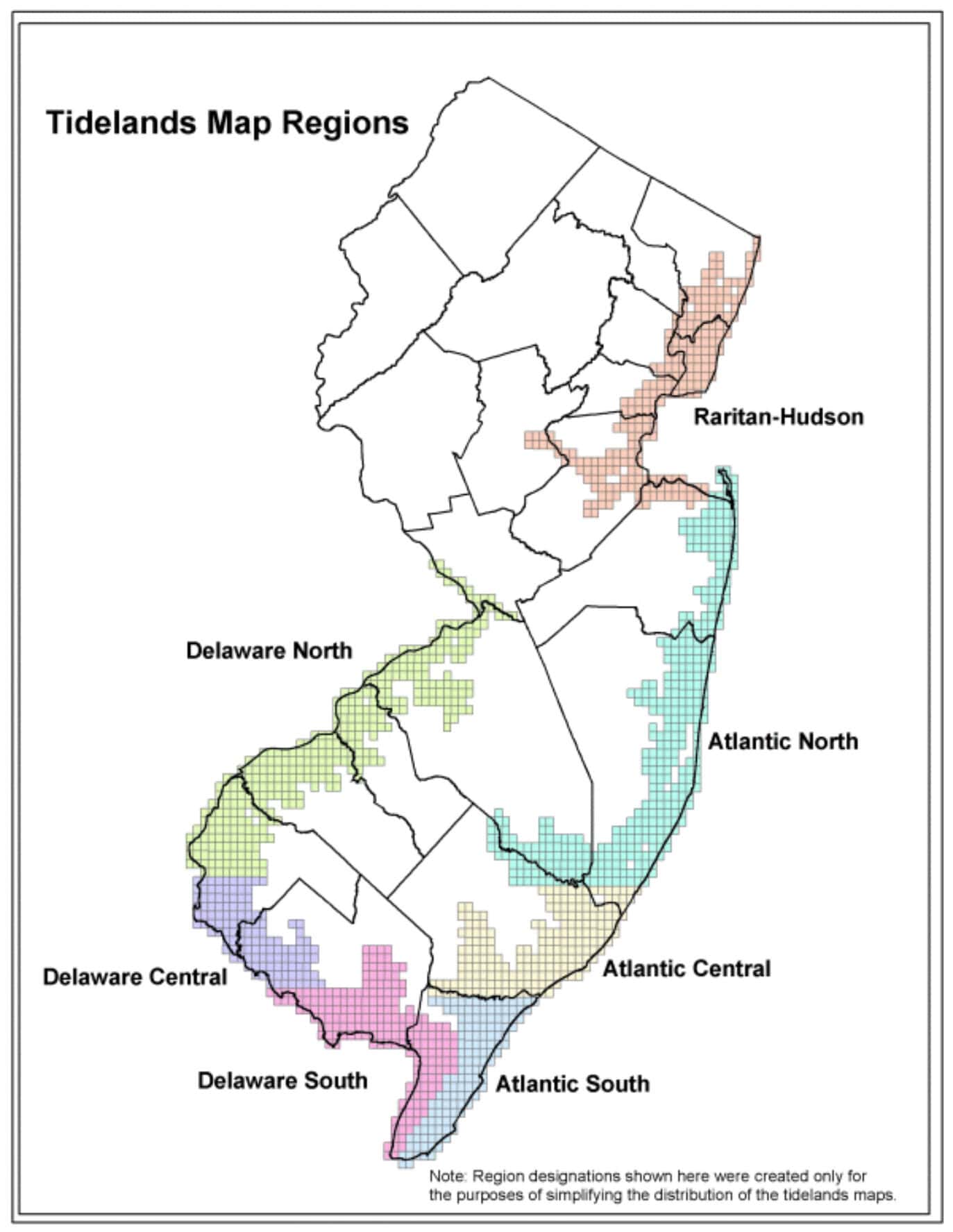
- State tidelands maps
- Environmental and geomorphic evidence
This reconstruction is a legal and technical exercise—not a simple field measurement.
Who Oversees Tidelands in New Jersey?
Tidelands matters in New Jersey are administered through the New Jersey Department of Environmental Protection (NJDEP) and the Tidelands Resource Council.
These agencies:
- Review tidelands claims and surveys
- Issue riparian grants and licenses
- Maintain official tidelands maps
- Determine whether State ownership applies
A tidelands survey often forms the technical foundation for applications reviewed by these bodies.
What a Tidelands Survey Is Not
A tidelands survey is not:
- A guarantee that the State has no claim
- A substitute for a riparian grant
- A standard mortgage survey
- A determination of flood zones
- An opinion on zoning or land use approvals
It is an analytical survey product intended to identify potential State interests based on law, mapping, and historic conditions.
Common Tidelands Issues in Real Estate Transactions
When tidelands are overlooked or misunderstood, common problems include:
- Title insurance exceptions that cannot be removed
- Delayed or failed closings
- Lender refusal to fund
- Unexpected State ownership claims
- Costly post-closing legal or survey work
Many of these issues can be avoided by identifying tidelands early in the transaction process.
Why Surveyor Experience Matters
Tidelands surveys require more than field measurements. They demand:
- Knowledge of New Jersey riparian law
- Experience interpreting historic shoreline evidence
- Familiarity with NJDEP and Council review standards
- Careful documentation and defensible conclusions
Because tidelands affect ownership, surveyors must clearly state assumptions, sources, and limitations to protect both the client and the public.
In Conclusion
Tidelands surveys are about who owns the land, not just where the lines are today.
In New Jersey, tidal influence—past or present—can mean the difference between private ownership and State ownership. If your property is near tidal waters, back bays, lagoons, or filled waterfront areas, tidelands should never be assumed away.
When ownership, financing, or development is involved, a properly prepared tidelands survey can prevent costly surprises and provide clarity where deeds alone cannot.
If you are unsure whether tidelands affect your property, the right time to find out is before closing, permitting, or construction—not after.